

pool pool
pool Data Infrastructure for Resource Circularity

Waste, handled.
All of it, by pool.

Discharge, collection and procurement, on one data platform.
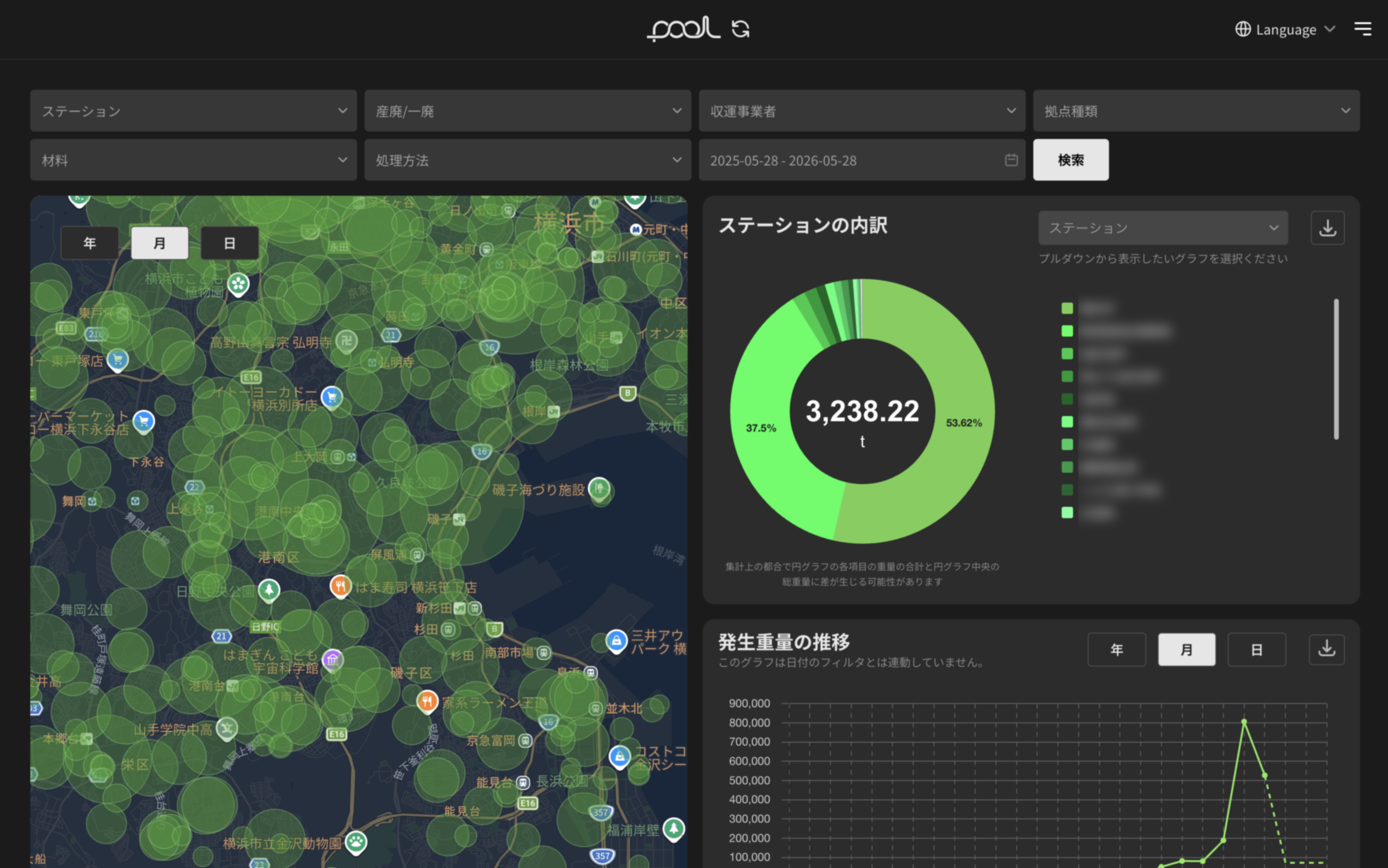
Live across 1,200 sites in Yokohama.

pool dashboard — live across 1,200 sites in Yokohama

Data
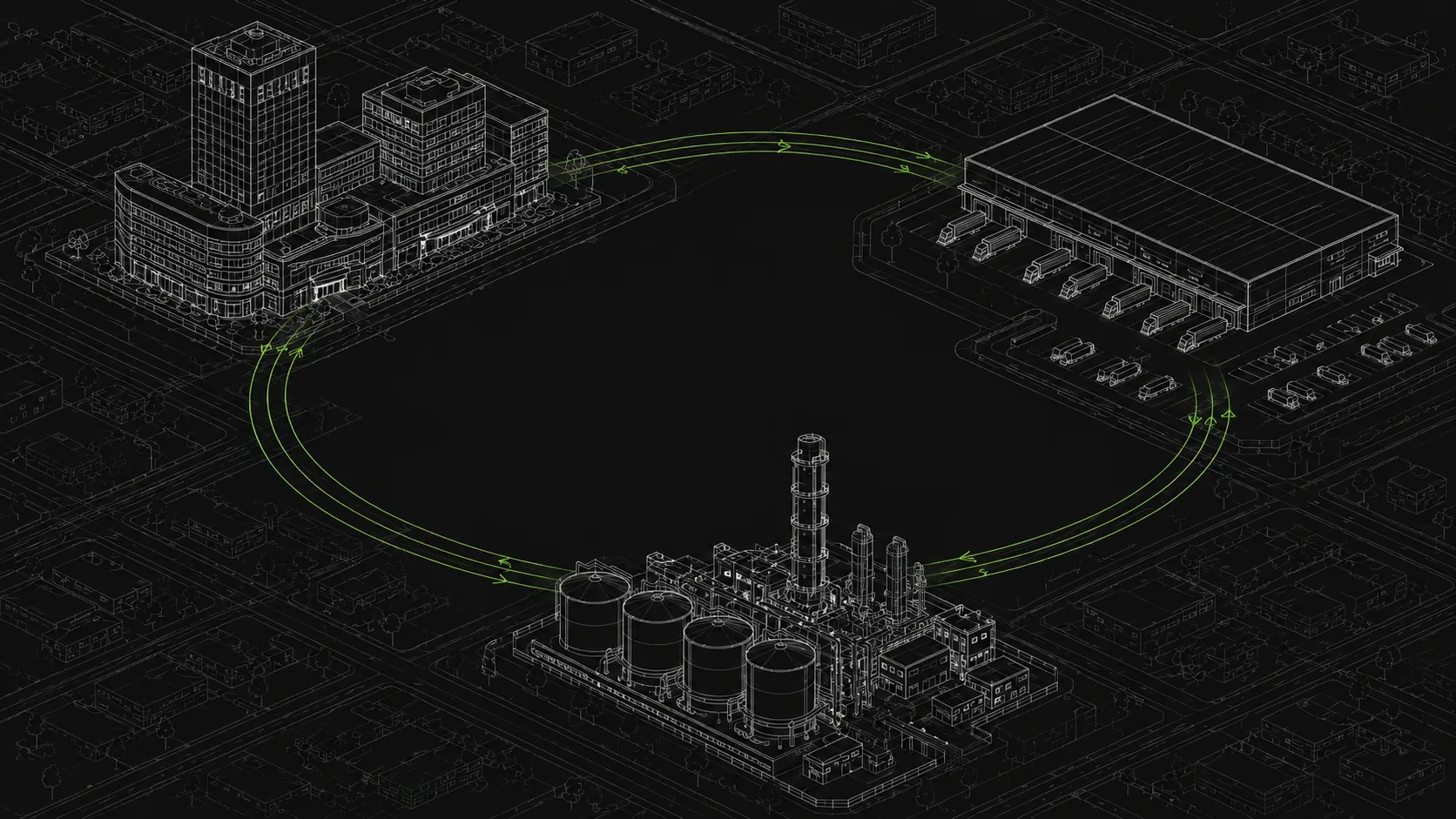
moves the loop.

Discharge, collection, procurement — three sites, connected.
pool is the data infrastructure for resource circulation.

At every site,
it works like this.

Discharge / collection / procurement — a screen optimized for each role.
Three sites, one set of data.

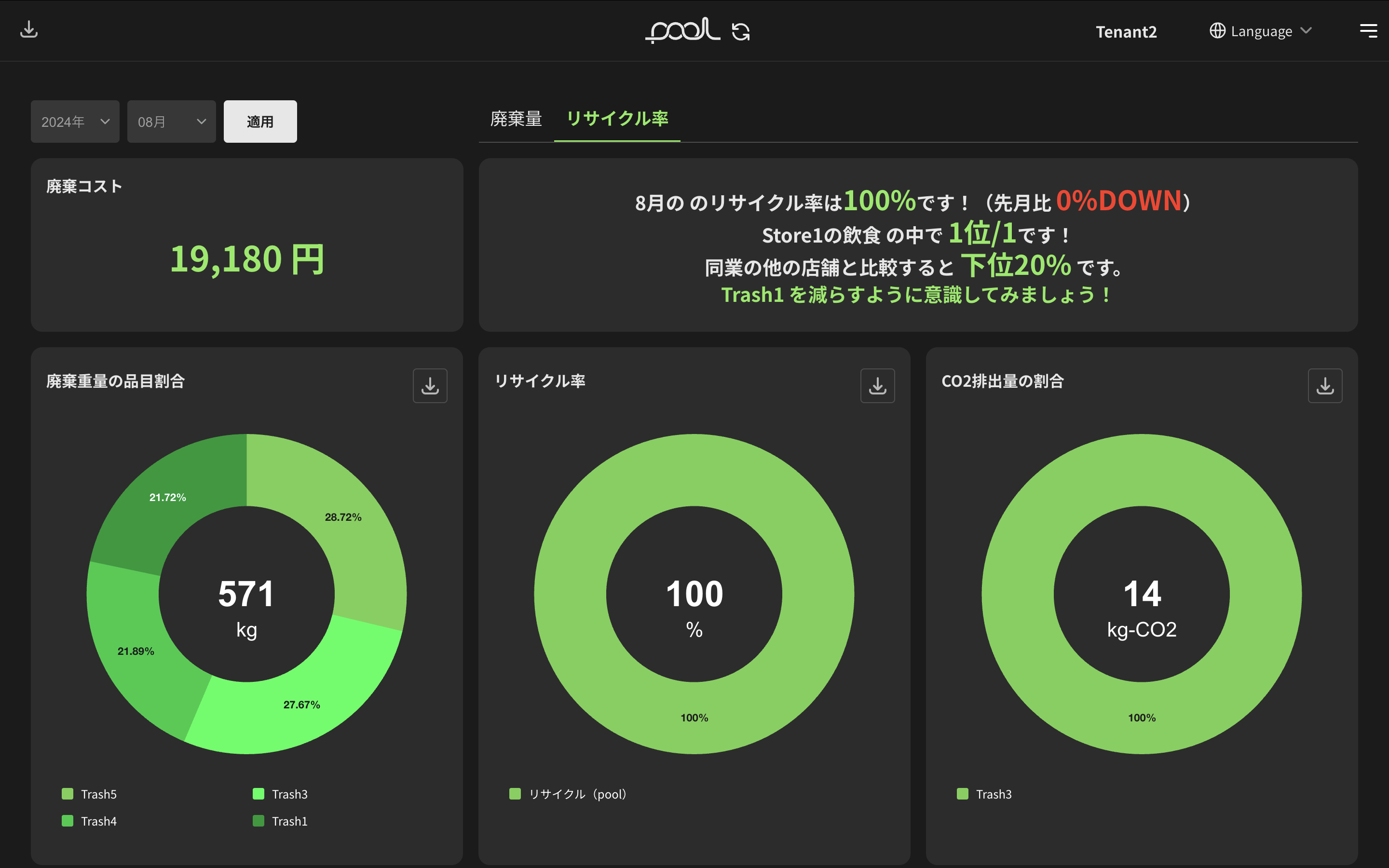
Discharge site dashboard
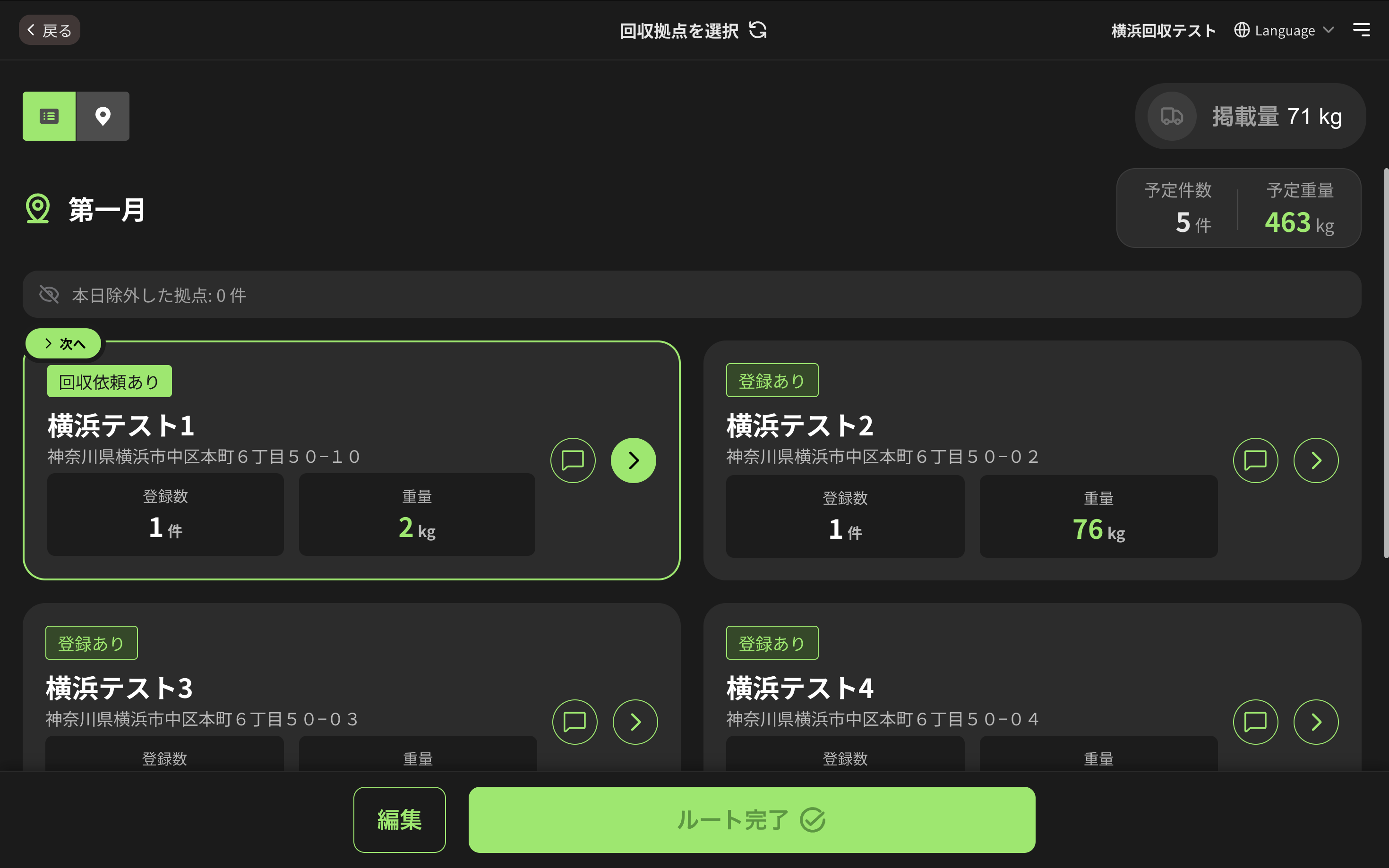
Collection & transport driver screen
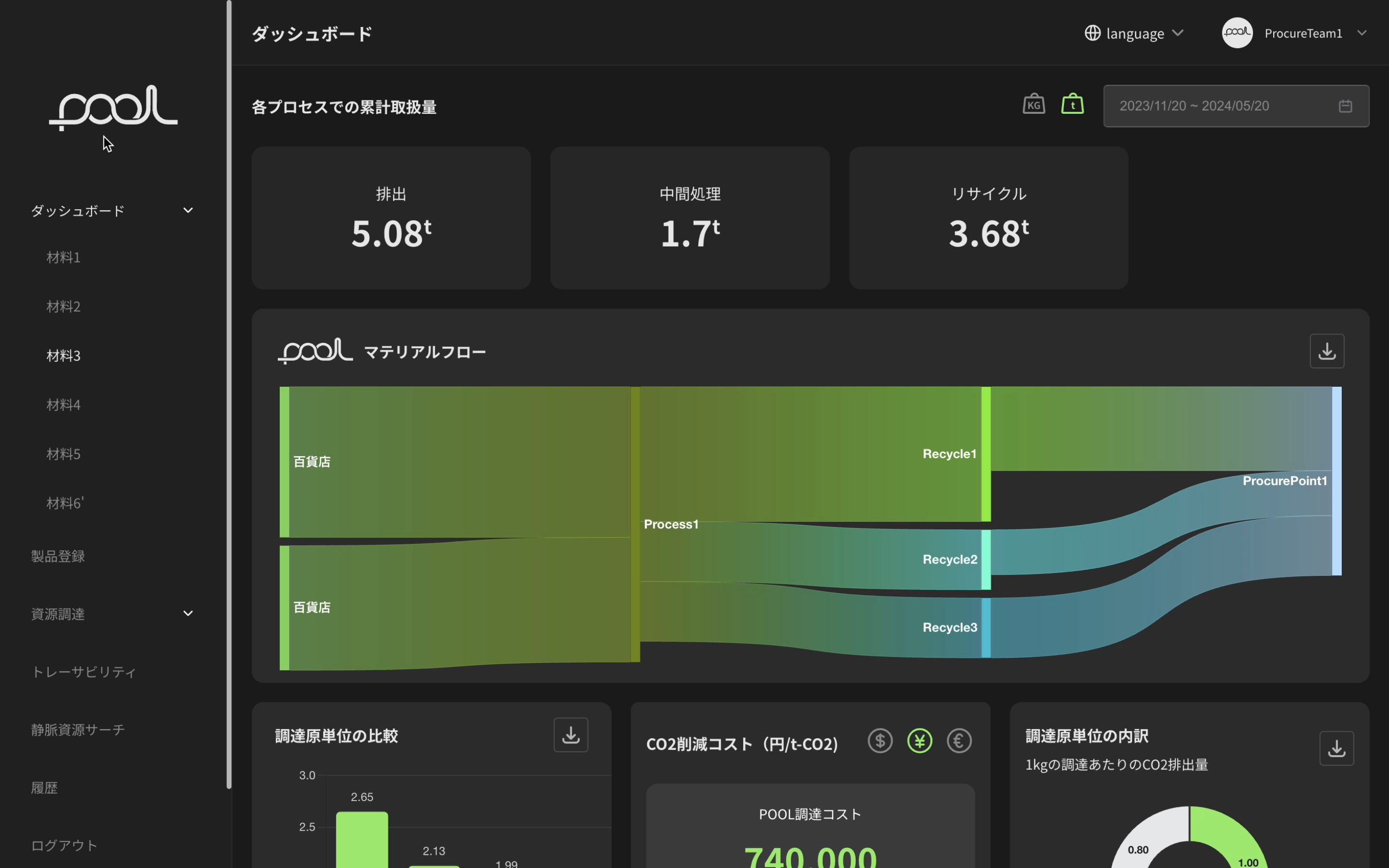
Procurement traceability screen
Discharge site dashboard
Collection & transport driver screen
Procurement traceability screen
Discharge site dashboard
Collection & transport driver screen
Procurement traceability screen

Every piece of waste-management information, in one place

Yokohama
made it official.

A partnership agreement, March 2025.
After an open call and pilot rollout, pool was written into the collection & transport tender specification.
This isn't a concept. It's already running as public urban infrastructure.

0+
connected sites
0blocks
Live across
the entire city
Discharge & collection
Built as the data
platform for operations

Whatever your role,
pool works like this.

Discharge, collection, procurement. pool takes on the work of each.

pool
01 / Discharge

Put resources
out.

Turn weighing by tenant, department, building or block into data — on a phone, tablet or PC. A single weighing flows at once into the manifest, tenant allocation and ESG disclosure.

Government Large commercial facilities Developers Factories / manufacturers
02 / Collect

Move
resources.

From the morning dispatch to the evening report. Wasted runs and leftover loads, resolved before you set off. The moment you unload, manifest slip B is issued automatically and JWNET integration is done.

Collection & transport operators
03 / Procure

Source
resources.

Both PCR-material procurement and take-back schemes, on one data platform. Automatically assemble the evidence data for recycled-content mandates (CRMA / ELV) and CSRD.

Automakers Trading houses Take-back brands

Already, across many sites.

Municipalities, large mixed-use complexes, manufacturing sites — pool is running all over the city.

Yokohama — pool running as public infrastructure Municipal
Yokohama
1,200+ connected sites / written into spec

Adopted as the specification for the commercial-waste route-collection tender. Running across all 7 blocks. Contract period from FY2026.

Tamagawa Takashimaya S.C — tenant weighing station Commercial
Tamagawa Takashimaya S.C
340 tenants / back-of-house DX

Per-tenant allocation and the evolution into a recycling station. A new standard for running commercial facilities.

Shibuya Mark City — pool at a large mixed-use complex Commercial
Shibuya Mark City
Mixed-use retail + office

Waste management for a large mixed-use complex, unified on pool. Per-tenant manifest issuance, automated.

Automotive Tier 1 plant — manufacturing intensity / ISO 14001 Industrial
Automotive Tier 1 plant
Manufacturing intensity / ISO 14001

Factory waste weighing, automated on pool. Waste volumes by department made visible, as evidence data for environmental management.

Turning great consumers
into great suppliers.

pool is that infrastructure.

Leave the rest to pool.

Start with the materials. If it clicks, take the 30-minute demo.
Flexible to your scale.

For investors, media and partnerships: info@recotech.co.jp

FAQ

Waste data and Scope 3 / GRESB — frequently asked questions

How do you calculate Scope 3 Category 5 (waste generated in operations)?

You calculate the emissions from treating the waste generated by your operations, using emission factors specific to each material and treatment method. Built on measured waste data, pool supports Scope 3 Category 5 calculation that does not rely on estimates.

How do you report waste volumes using measured (primary) data?

By accumulating weighed data at every discharge and collection. pool makes waste volumes visible with measured primary data, raising the share of primary data that GRESB values.

How do you secure waste traceability and proof of provenance?

By recording data continuously from discharge through collection to treatment. pool preserves resource circulation traceability (data with certified provenance), underpinning the credibility of ESG disclosure and procurement.

How can waste data be used for Scope 3 / GRESB reporting?

pool's measured data can serve as reliable primary data for Scope 3 Category 5 calculation and GRESB waste performance items. You can replace estimate-based reporting with a measured-value basis.