01 / Driver UI
For the driver, one device.
All you learn is a few taps. Leave the paper and the daily reports behind. The screen guides you.
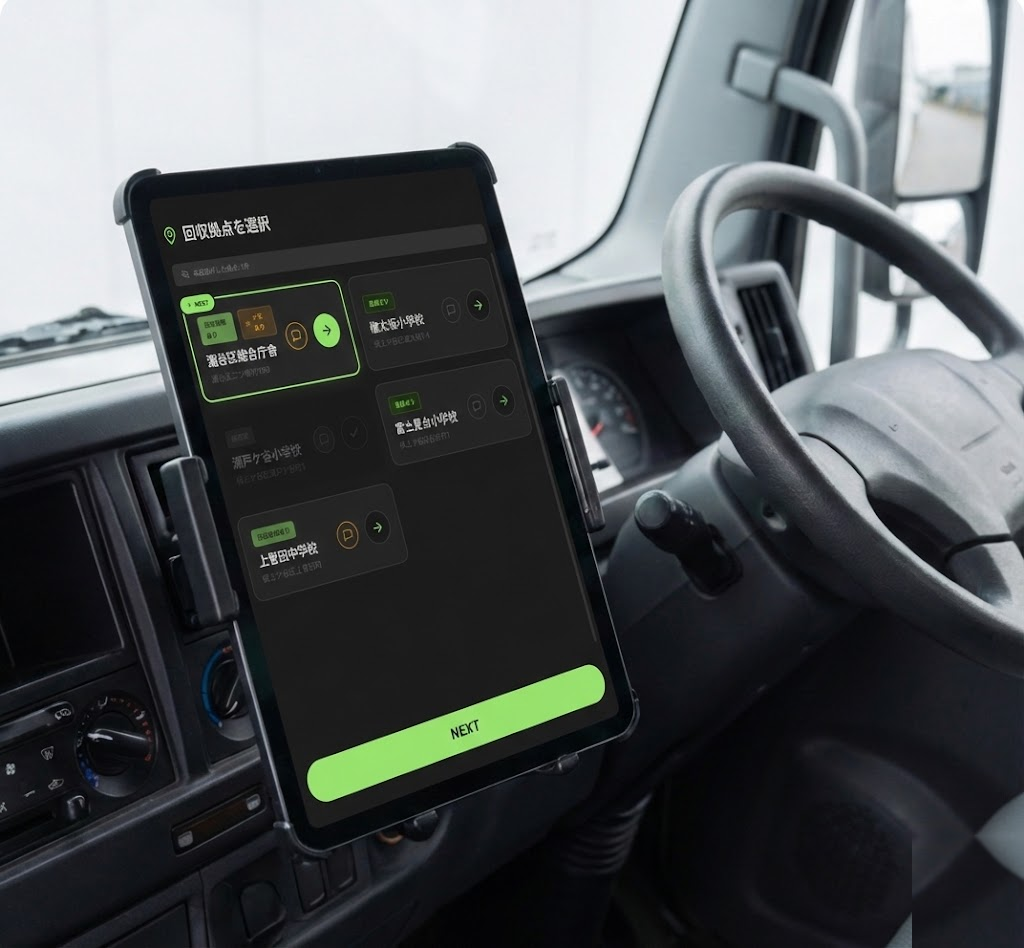

 For Haulers · Collection & Transport
Dispatch, a manifest slip for every pickup, daily reports, the end-of-month tally —
everything but the driving, on one data platform.
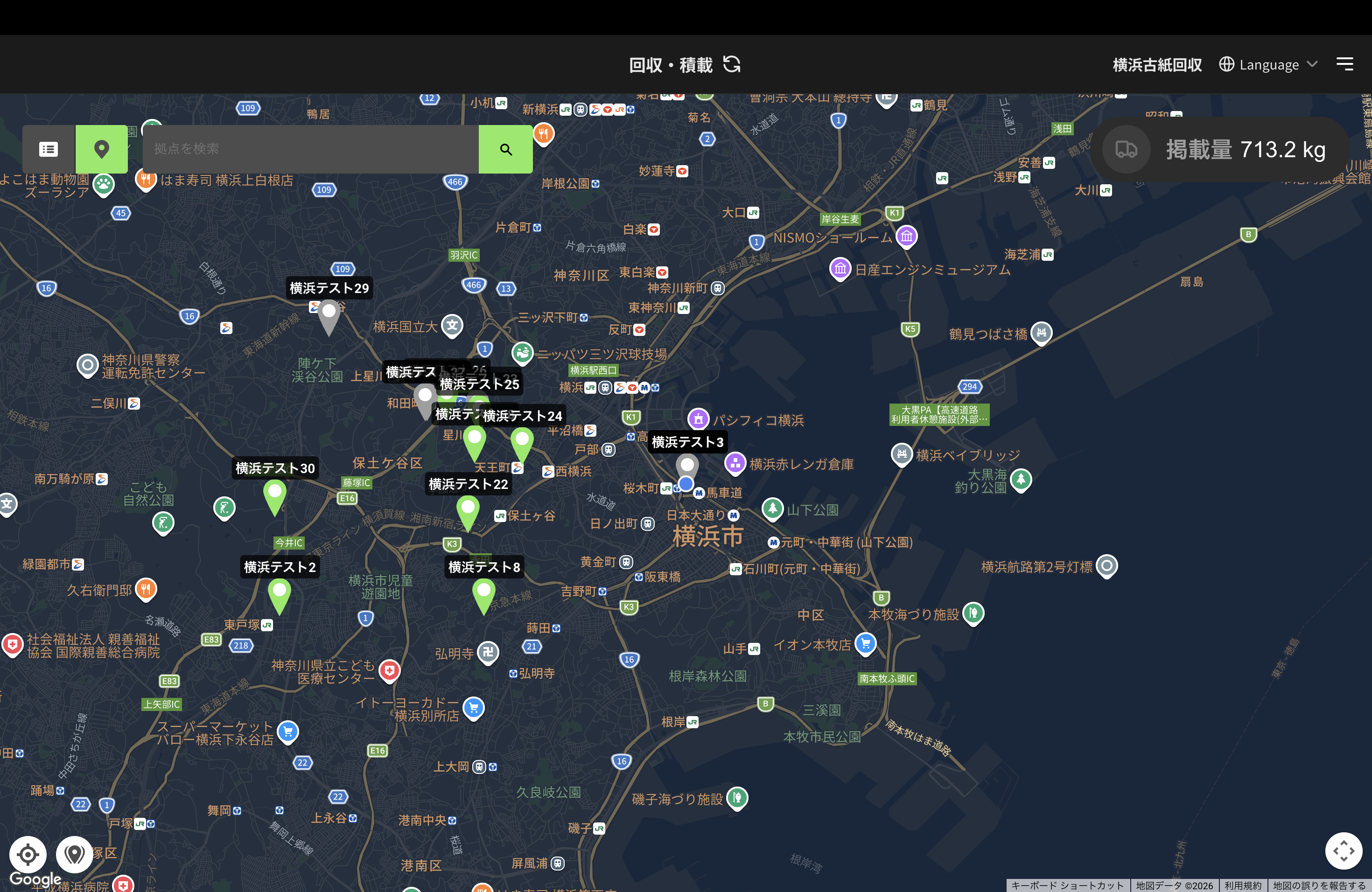
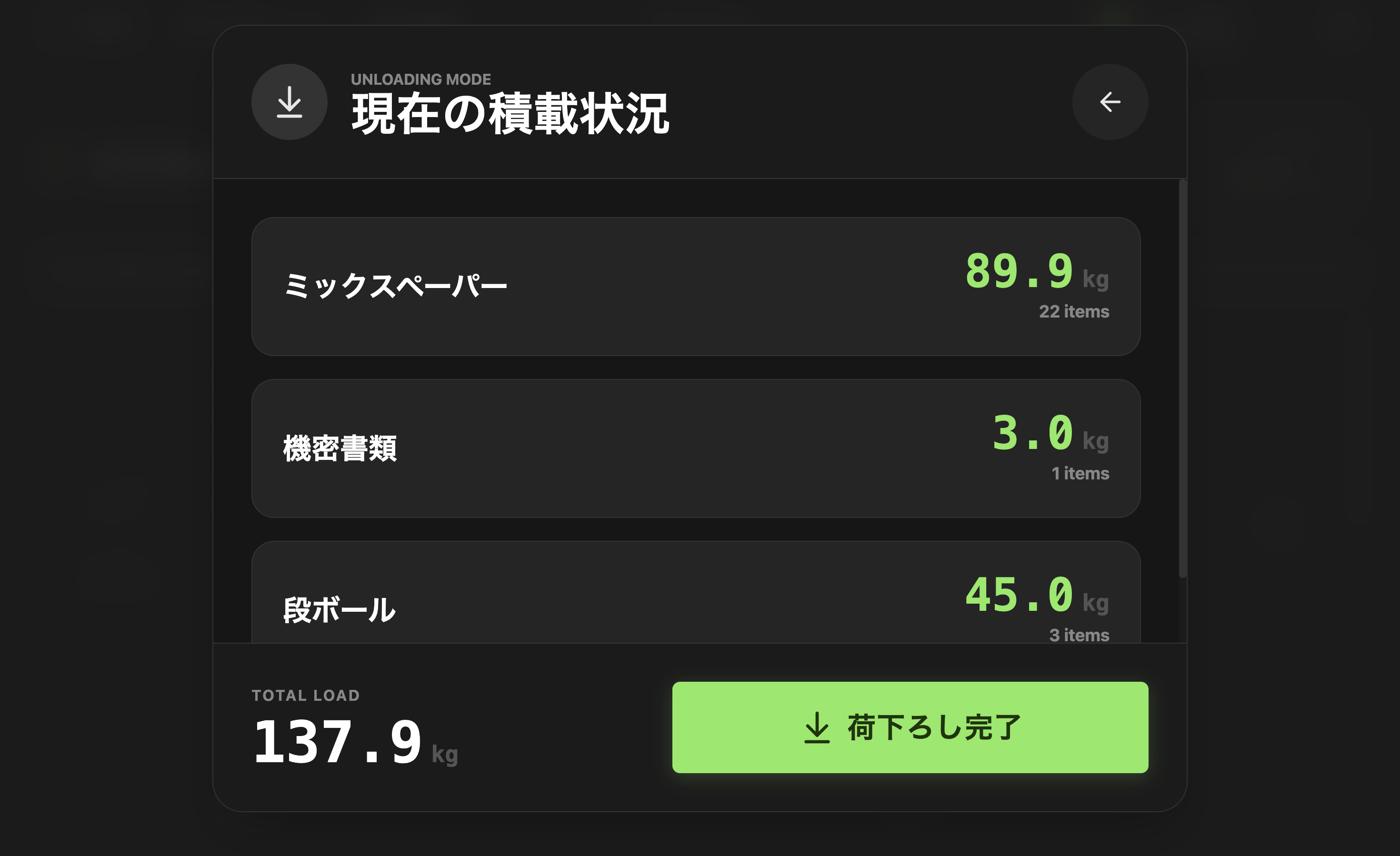
You know the volume before you leave.
The moment you tap "unloaded," the manifest slip, the daily report, the end-of-month tally — all fall into place on their own.
A new kind of experience.
All you learn is a few taps. Leave the paper and the daily reports behind. The screen guides you.
The generator's self-weighed volumes arrive before the truck rolls out. The order you run and the load you carry are set before you drive off.
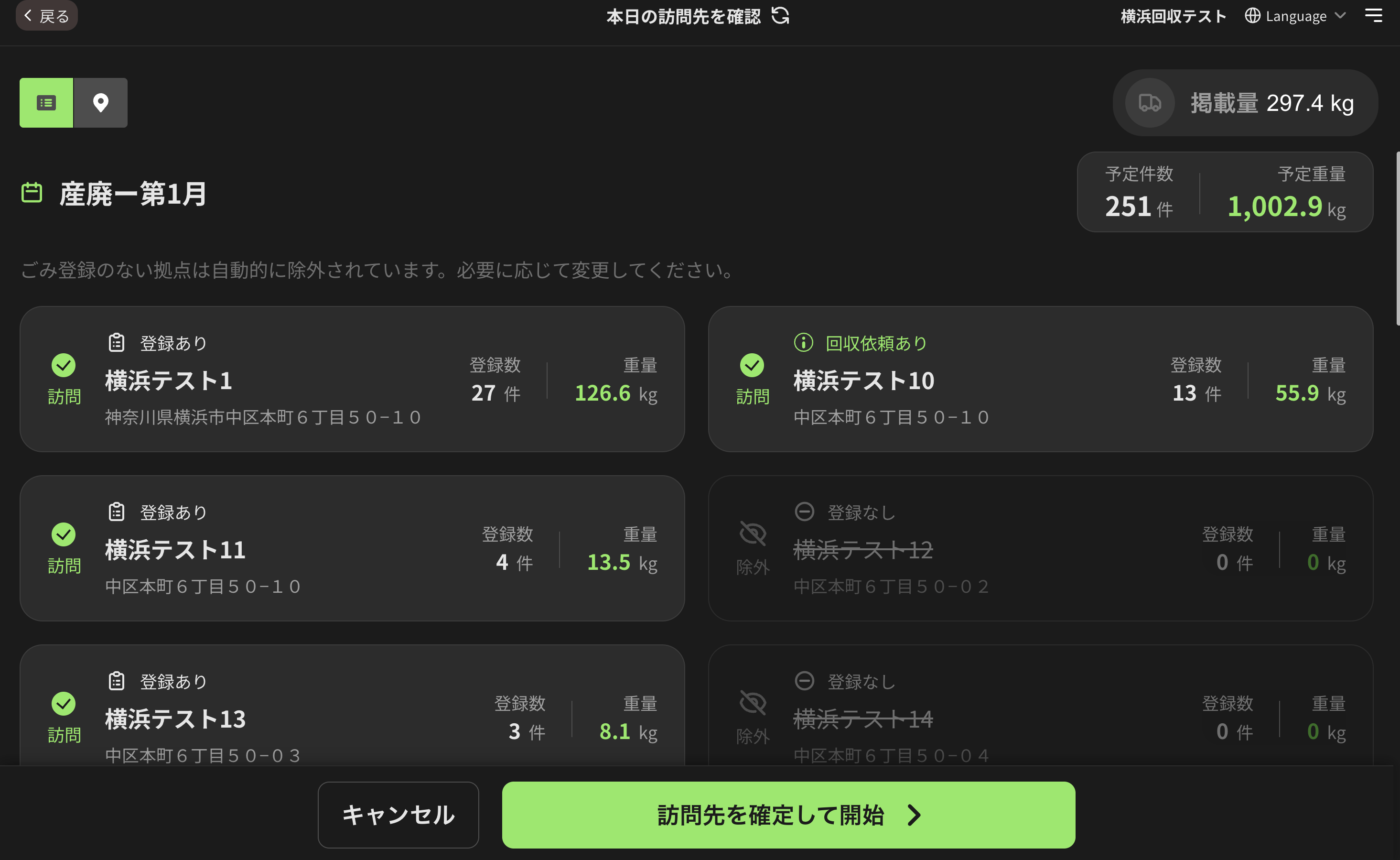
The manifest slip, the daily report, the end-of-month tally. No more reconciling, no more paperwork.
Recycling rate, discharge volume, proof of proper treatment — with every pickup, the shipper's dashboard updates.
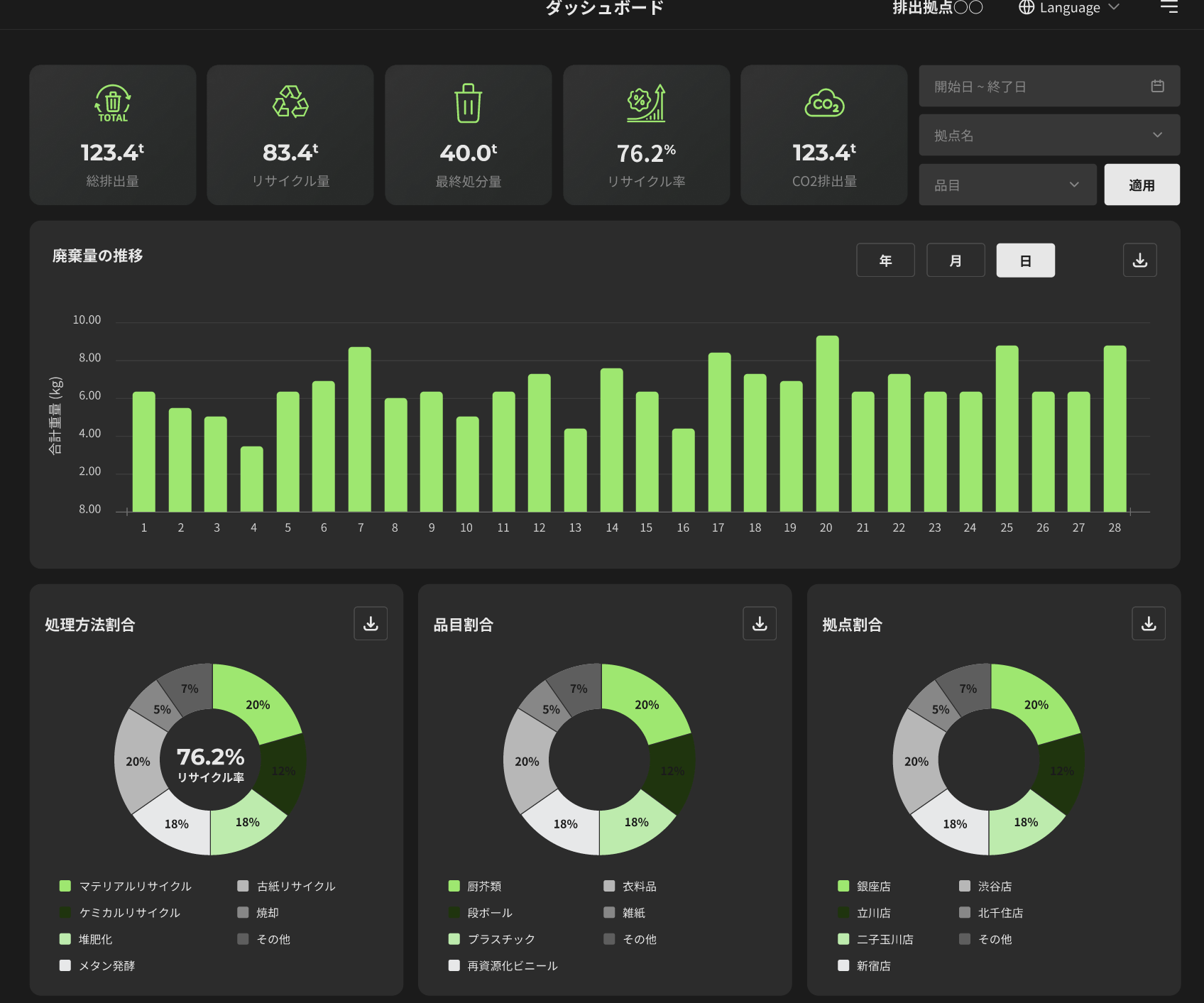
Pick the route, pick the site, pick the item —
all you learn is how to choose. Leave the paper and the daily reports behind.
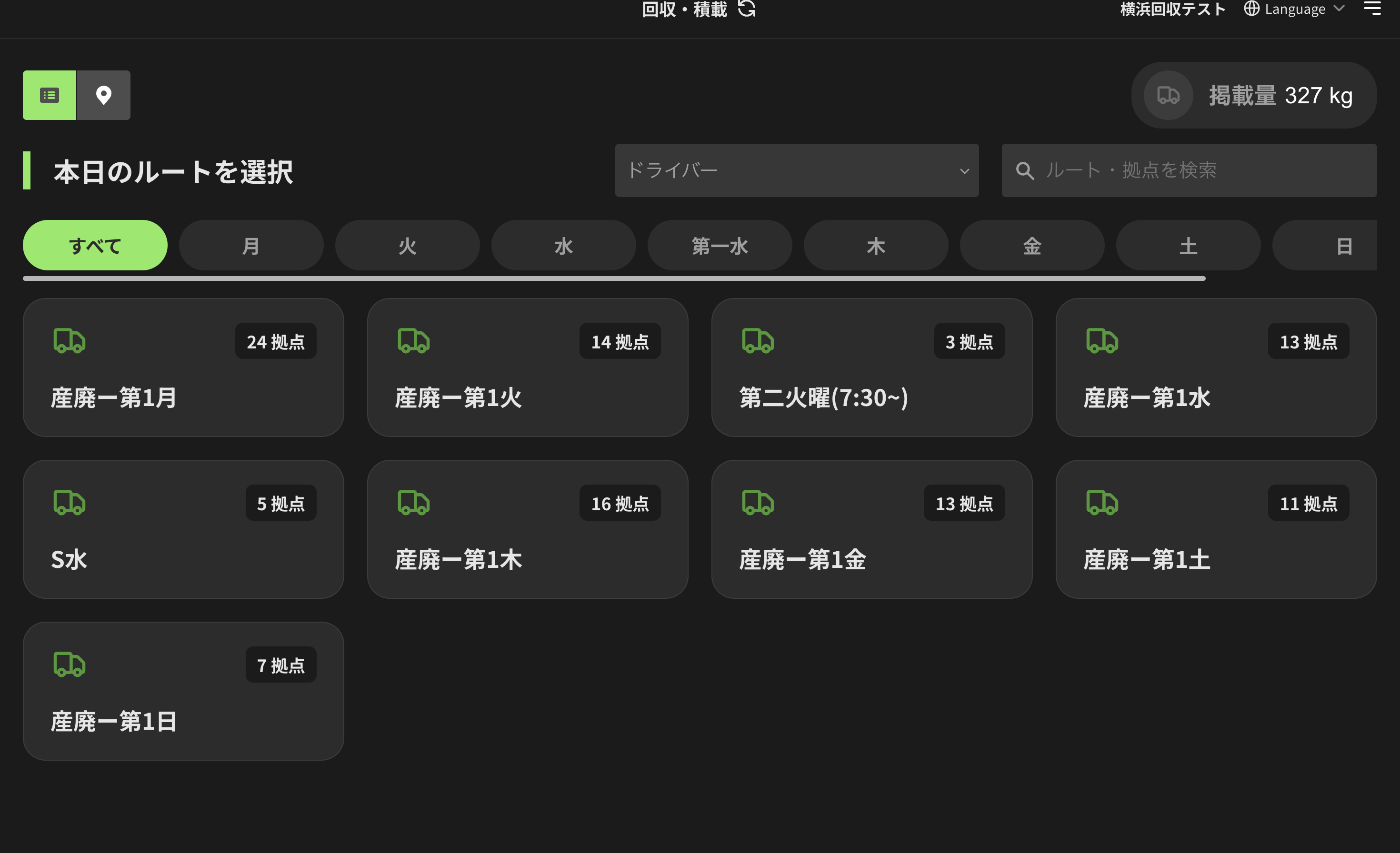
Before you set out, pick today's route.
Number of sites and logged volume — known before you drive off.
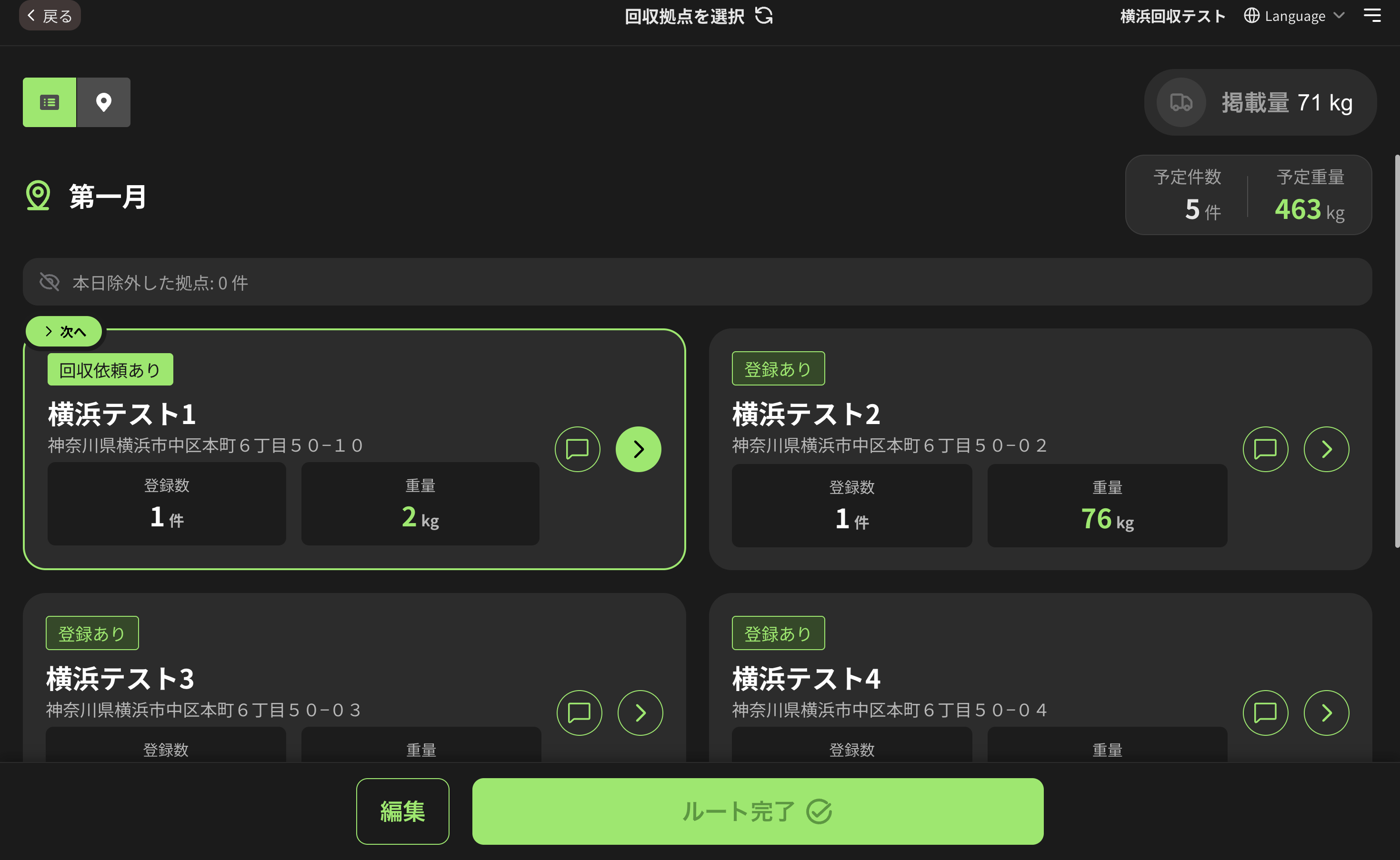
Where, what, how much —
every stop, right there in your hand.
Choose your next site with a tap.
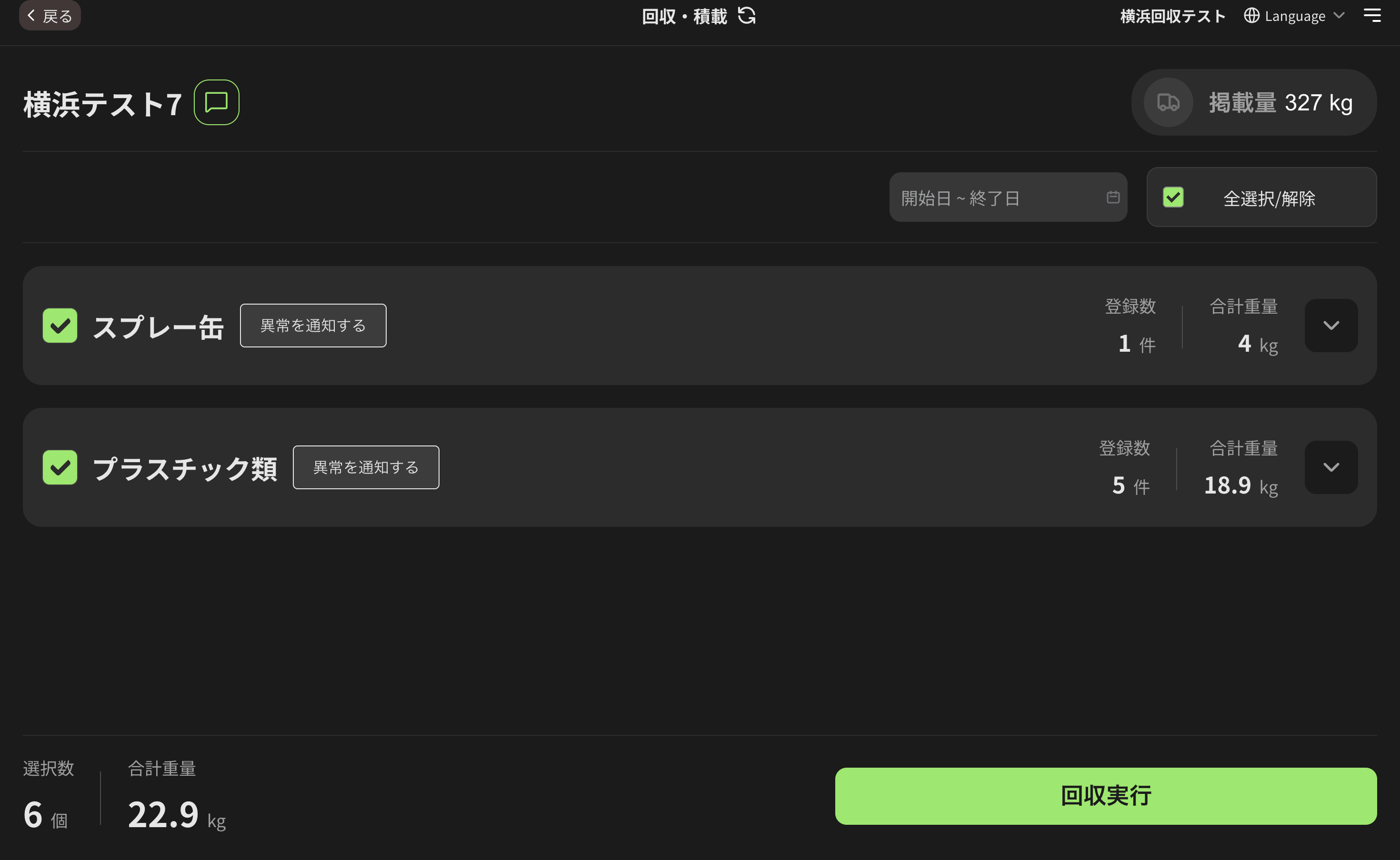
One tap on site, and that's it —
the item and weight are recorded in pool.
No more paper slips, notes or duplicates.
Adopted as part of the spec for Yokohama's commercial-waste route-collection tender.
Across all 7 blocks (industrial waste / general waste / paper), every awarded operator runs on pool.
This isn't a concept. Through the contract term from FY2026, it's already running.
pool reaches into every corner of the work.
Guided by your requests, the features keep evolving.
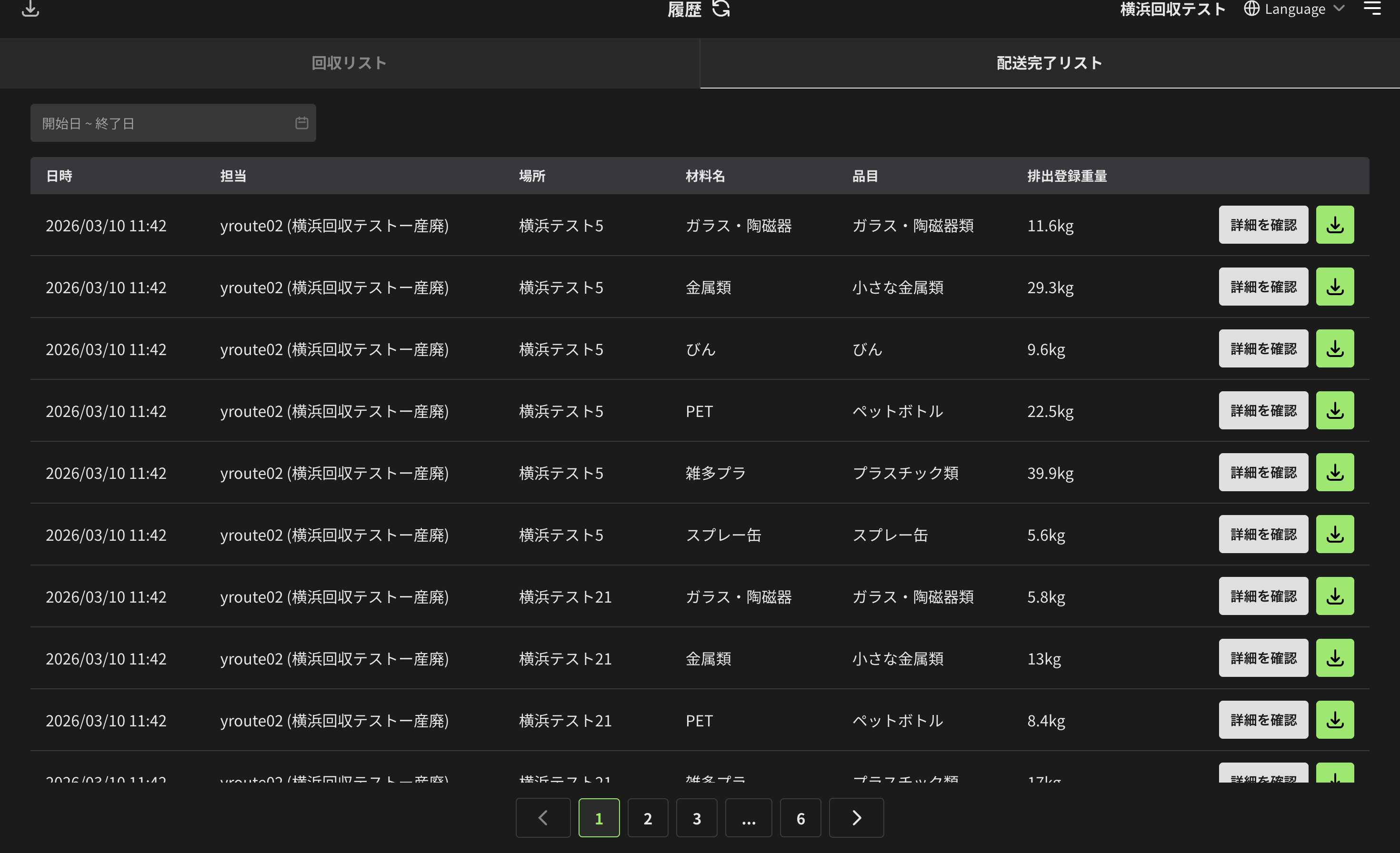
The morning dispatch board. Before you set out, every site and volume is visible.
We asked Yokohama's FY2026 awarded operators about life after adopting pool.
Dispatch, office, field, management —
their words, straight from each of them.
Knowing the volumes upfront is something you never get in normal route collection. Headcount and trucks are set in advance. Because I can see the next pickup volume, I can decide first thing in the morning whether to push or pull back.
The back-and-forth with facilities is gone. The "not today" calls over summer and winter breaks dropped to zero. Because I can see the completed-collection history in real time, I can answer a "you haven't come yet" right away.
Search predictions come up before I even type. I wasn't sure about the dark screen at first, but once you get used to it, it's easy on the eyes. Since I already know what's loaded at the next stop, there's no more second-guessing.
I'd never seen a system that shows you the numbers in advance. If we can vary collection frequency between busy and slow seasons, both environmental load and cost come down structurally. We move more efficiently, and the client's fees go down too. It's a genuine win-win.
Labor keeps shrinking. Oil eats into the bottom line every month.
Shippers have started demanding data.
To keep the routes running, change the system now.
The driver shortage is now structural. Days you can't fill one truck to one route come up several times a month. When loads and stop counts are known in advance, the same headcount can move more.
Fuel, labor, vehicle upkeep. The cost structure of collection has shifted sharply in the last few years. Just cutting empty runs and left-behind loads changes margins structurally.
Recycling rate, CO2, proof of proper treatment — the disclosure wave has reached the shipper side too. We're entering an era where the collector who can hand back data wins the contract.
Switching over takes no downtime.
Keep your existing operation running while you replace it with pool, one piece at a time.
JWNET registration details, past collection history, customer lists — pool takes over the data you already run on. No need to rebuild from scratch.
Run your existing system and pool in parallel. Try it on a single route, then roll it out company-wide once you're comfortable. No disruptive switch on the ground.
10 trucks or 100. Start small and expand as you need to. Flexible plans built for small and mid-sized operations.
Collection used to mean hauling waste.
From here on, it means delivering resources.
pool is that infrastructure.
Start with the materials. If it clicks, take a 30-minute demo.
Begin on a sensible plan sized to your operation.
For investors, media and partnerships, reach us at info@recotech.co.jp
FAQ
It is a system where collection & transport and intermediate-treatment operators handle the weights measured on platform scales, floor scales and the like — from reception and issuing weight certificates through billing and aggregation, end to end. As a weighing management system, pool keeps the data unbroken from weighing to dispatch to the e-manifest.
pool connects automatically to platform and floor scales, so measured weights flow into reception, weight slips and billing with no manual entry. It eliminates transcription errors and reception wait times.
Build a system where weighing data captured at reception flows straight into daily reports, monthly aggregation and billing. pool automates the weighing, reception and aggregation of industrial waste, compressing the end-of-month wrap-up.
pool supports e-manifest (JWNET) integration, reducing manual entry from collection and weighing data through manifest registration. It also makes it easier to prepare for the mandatory e-manifest reporting starting April 2027.
By optimizing collection routes and loads, daily turnarounds and driver utilization improve. pool optimizes collection routes through integration with generator-side data, and also cuts the office work beyond the driving hours.
Drivers enter collection, weighing and driving logs on their phone and share them with the office in real time. pool digitizes industrial-waste daily reports in an app, driving the shift away from paper.