01 / Touch UI
Intuitive, so no one gets lost.
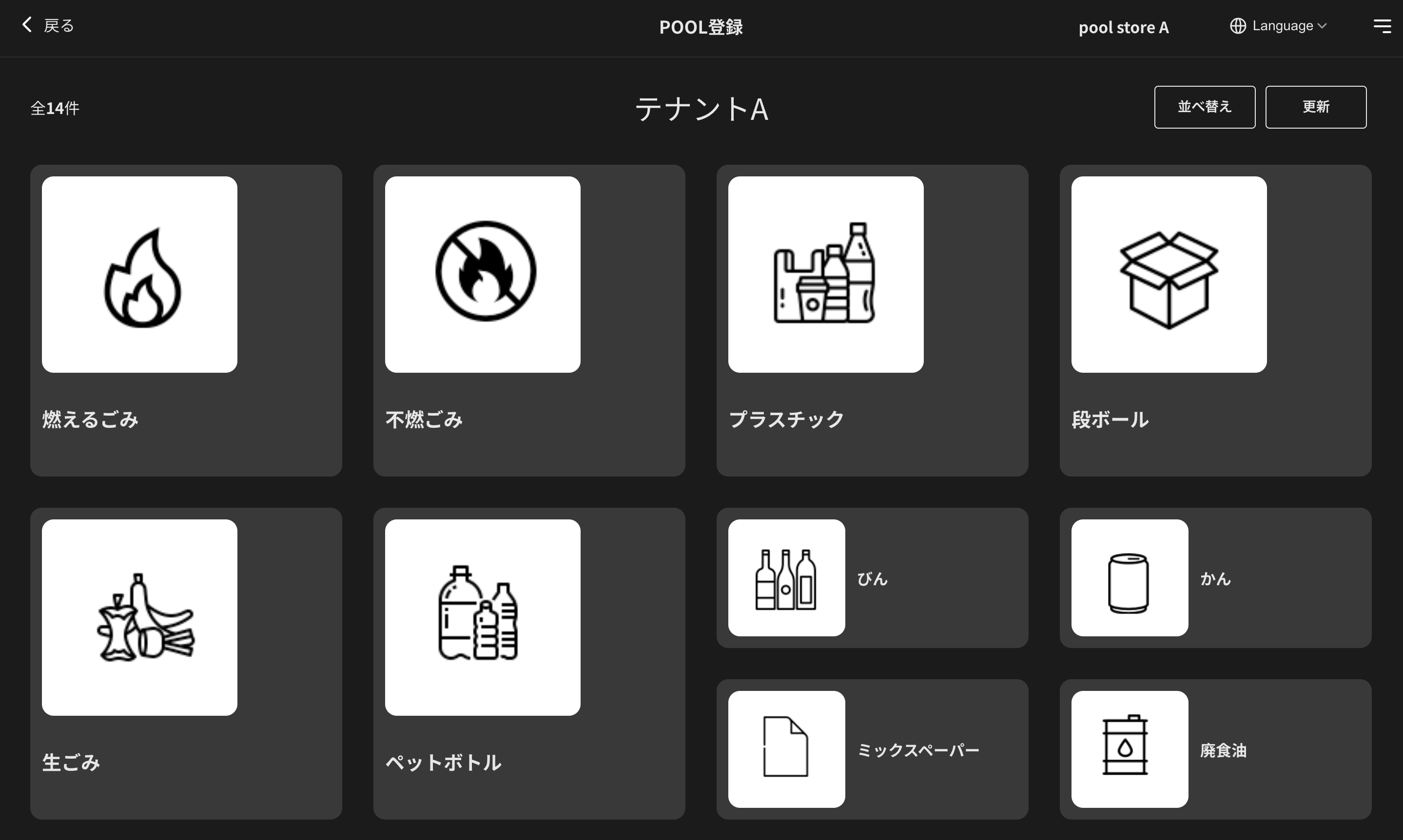
Big icons, bold type, and a layout that resists mistaps. Switching from legacy scales, input errors drop visibly.

 For waste generators · For Dischargers
Manifests, billing, headquarters reporting, disclosure —
multi-site waste management on a single data platform.
A single weighing reaches all the way to manifests, billing, and non-financial disclosure.
One line of data connects the field and headquarters.
Big icons, bold type, and a layout that resists mistaps. Switching from legacy scales, input errors drop visibly.
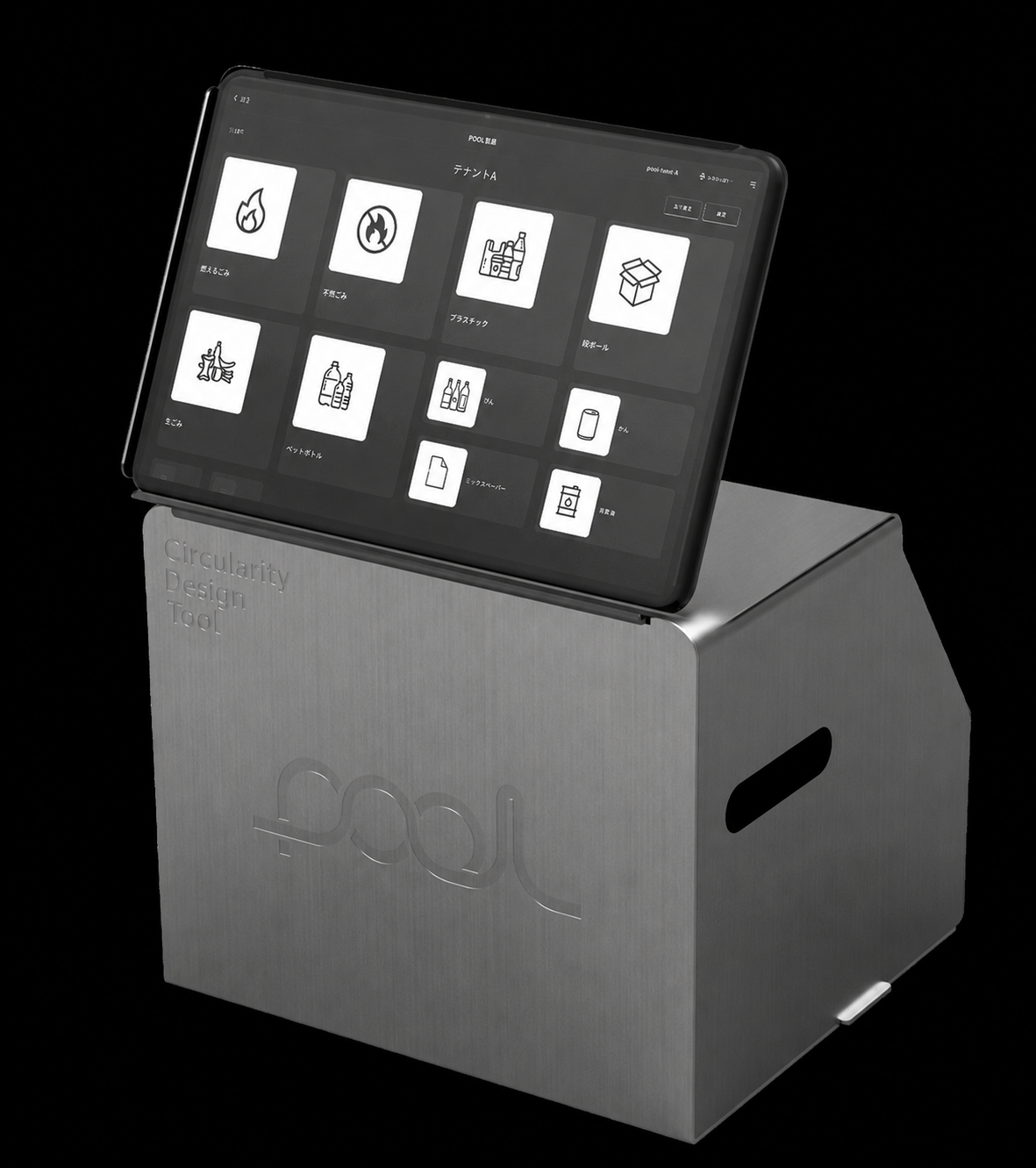
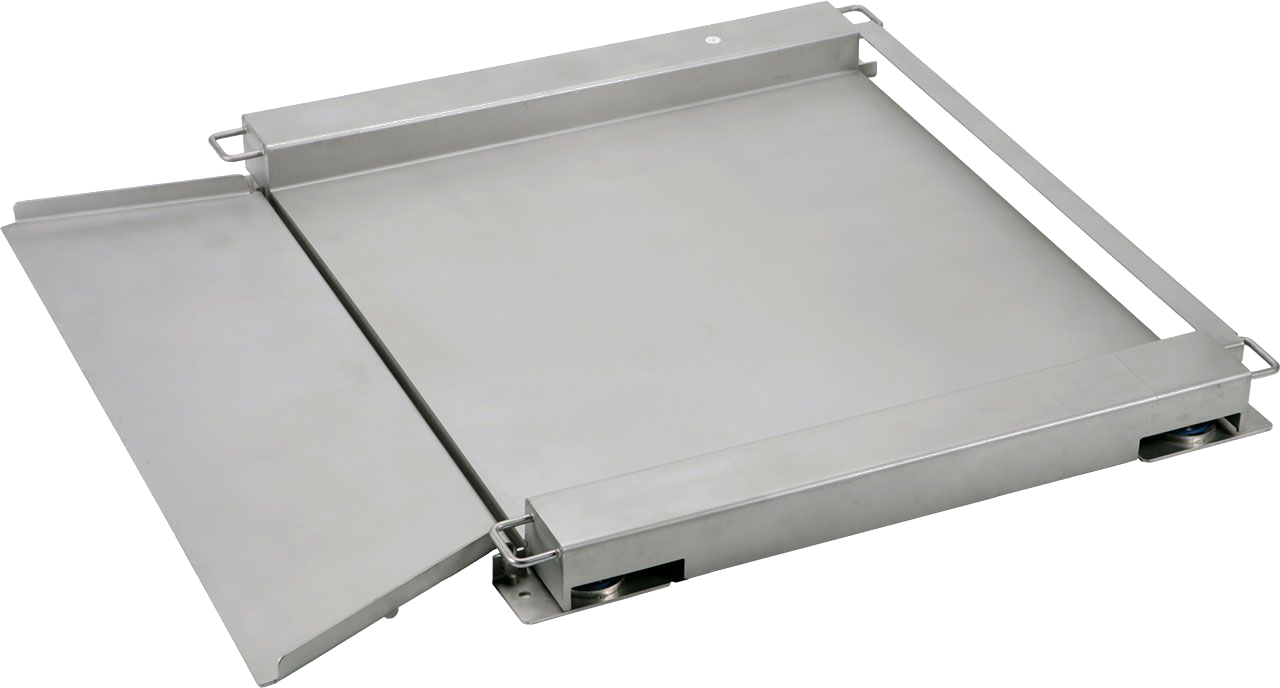
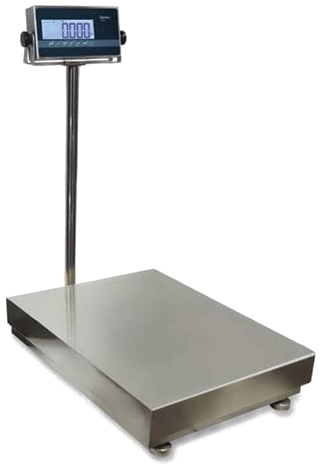
pool display, floor scale, platform scale, IC reader. Sent straight to pool over RS-232C / NFC — no manual transcription in between.
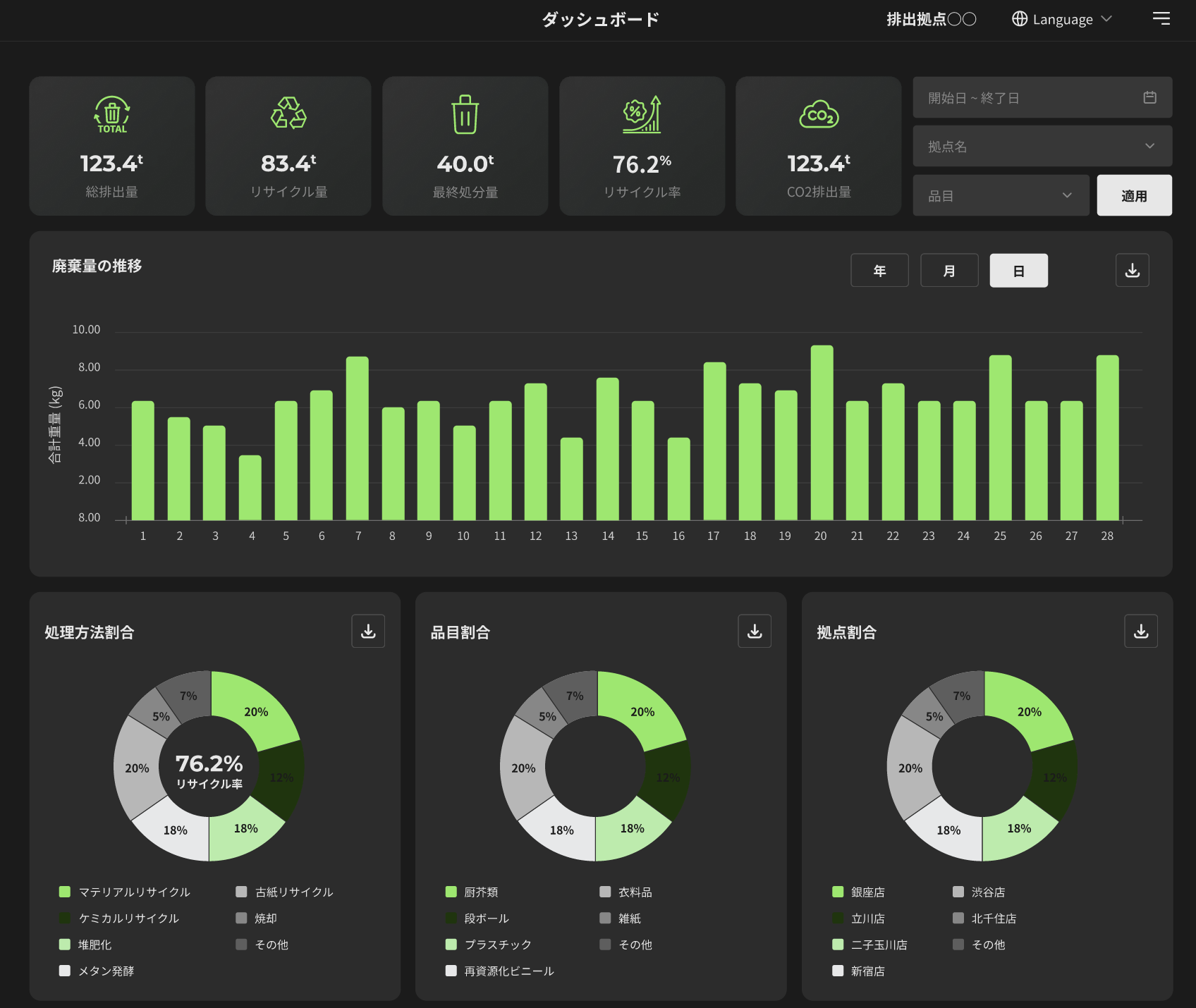
By site, by tenant, by item, all the way to Scope 3 Cat. 5. No more manual aggregation. Open pool, and it's all there.
Wired straight to JWNET. No more paper slips, no more touching the e-manifest console. Individual issuance per tenant is supported too.
1,200 sites in Yokohama. 340 tenants at Tamagawa Takashimaya. Every plant of an automotive Tier 1.
Government, retail, factories — pool runs across different sites.
IC tap to identify the tenant, pick the item, confirm the weight —
in three steps, the weighing data reaches pool.
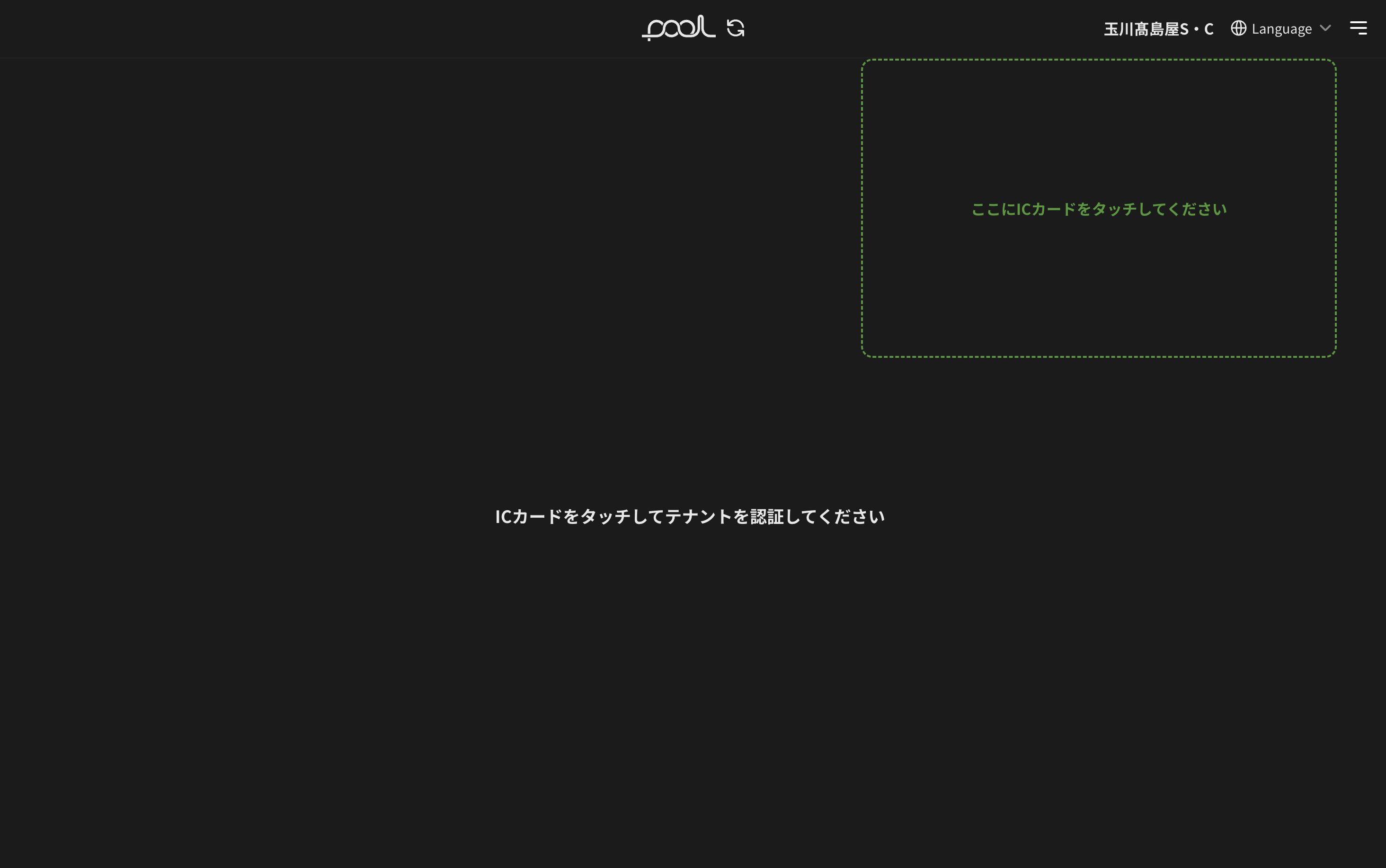
An IC tap identifies the tenant instantly.
Can be skipped.
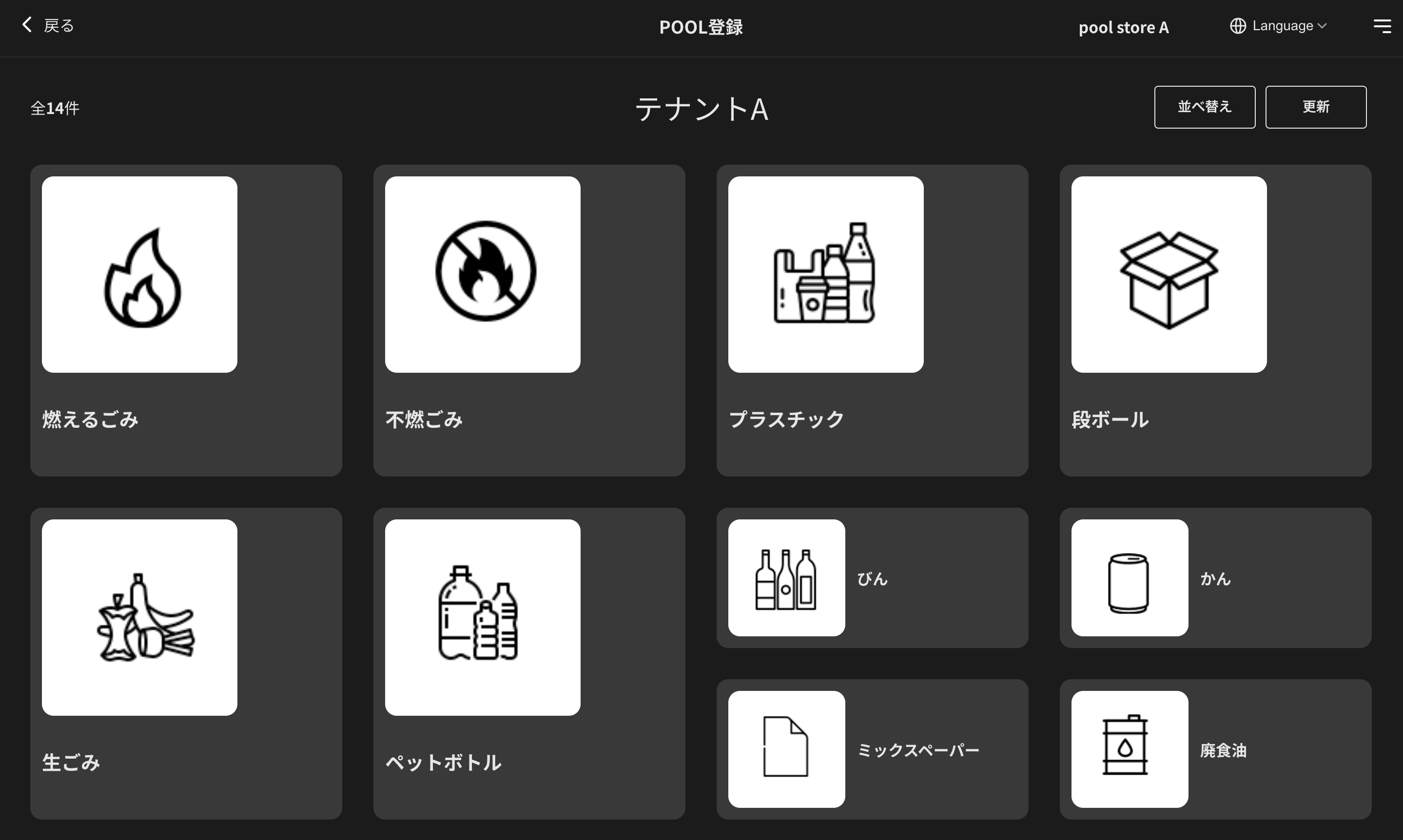
Frequently used items appear large in the top left.
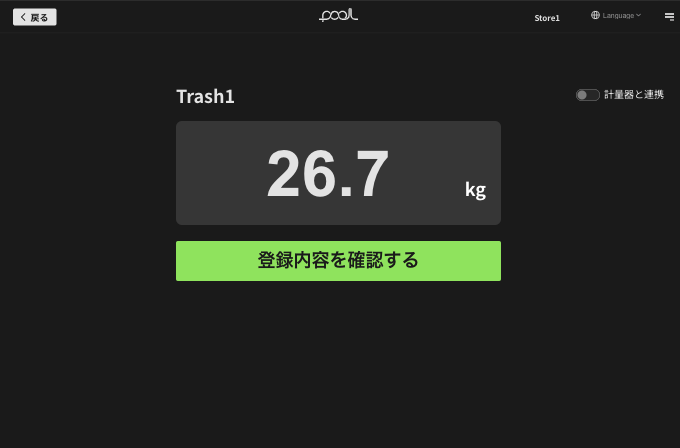
The scale's measured value shows exactly as read.
The four shown here are only part of what it touches.
pool reaches everywhere in the workflow.
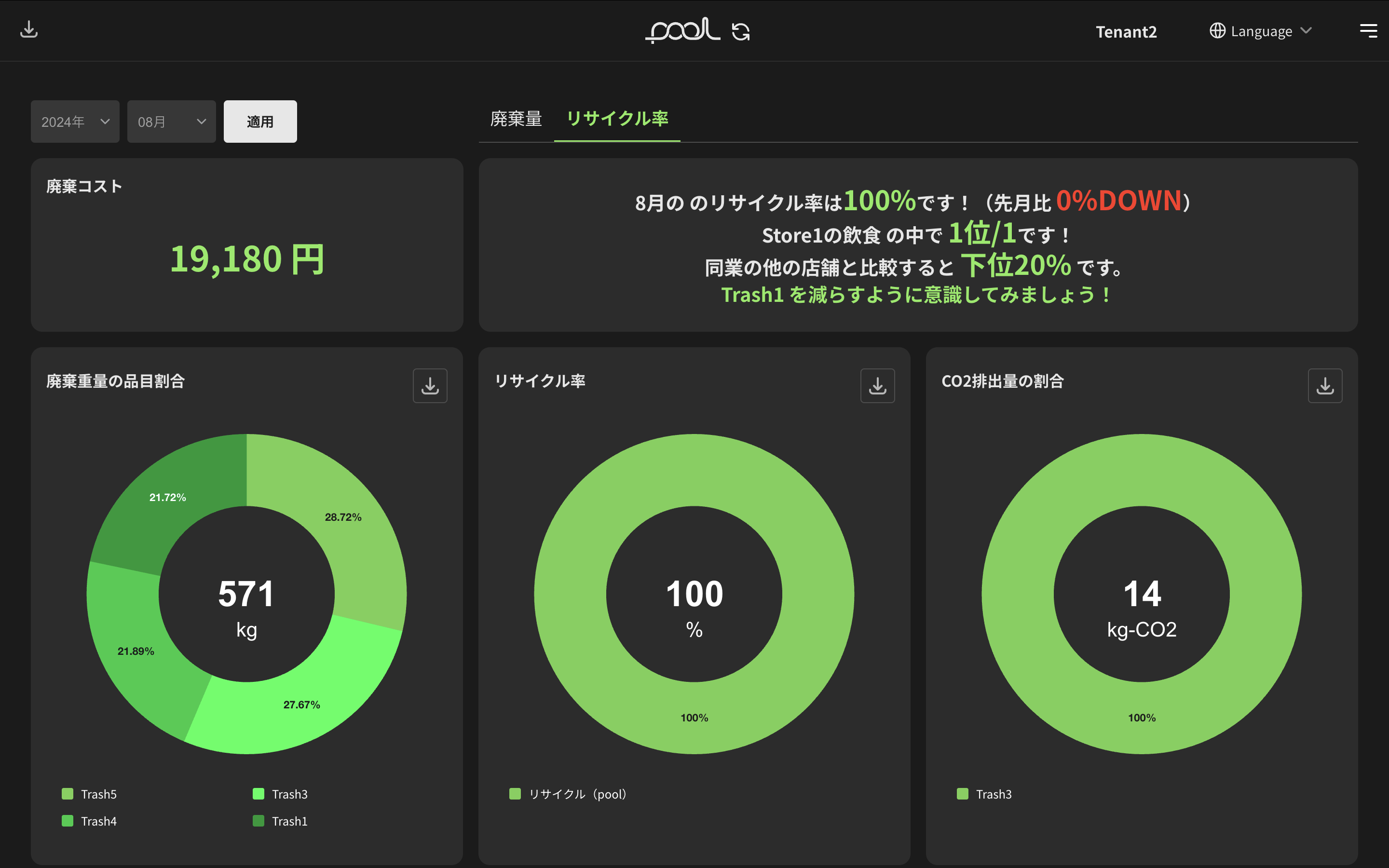
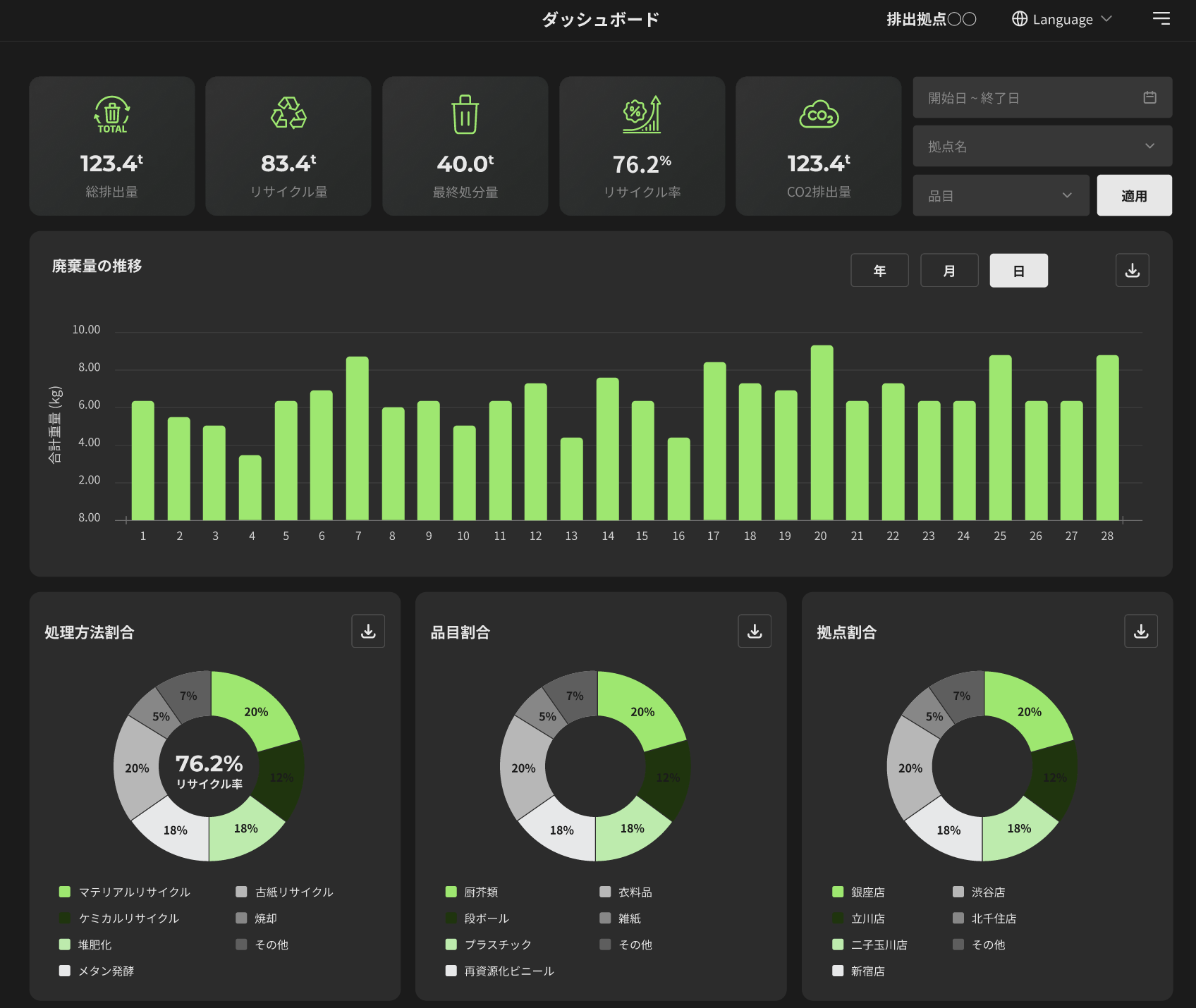
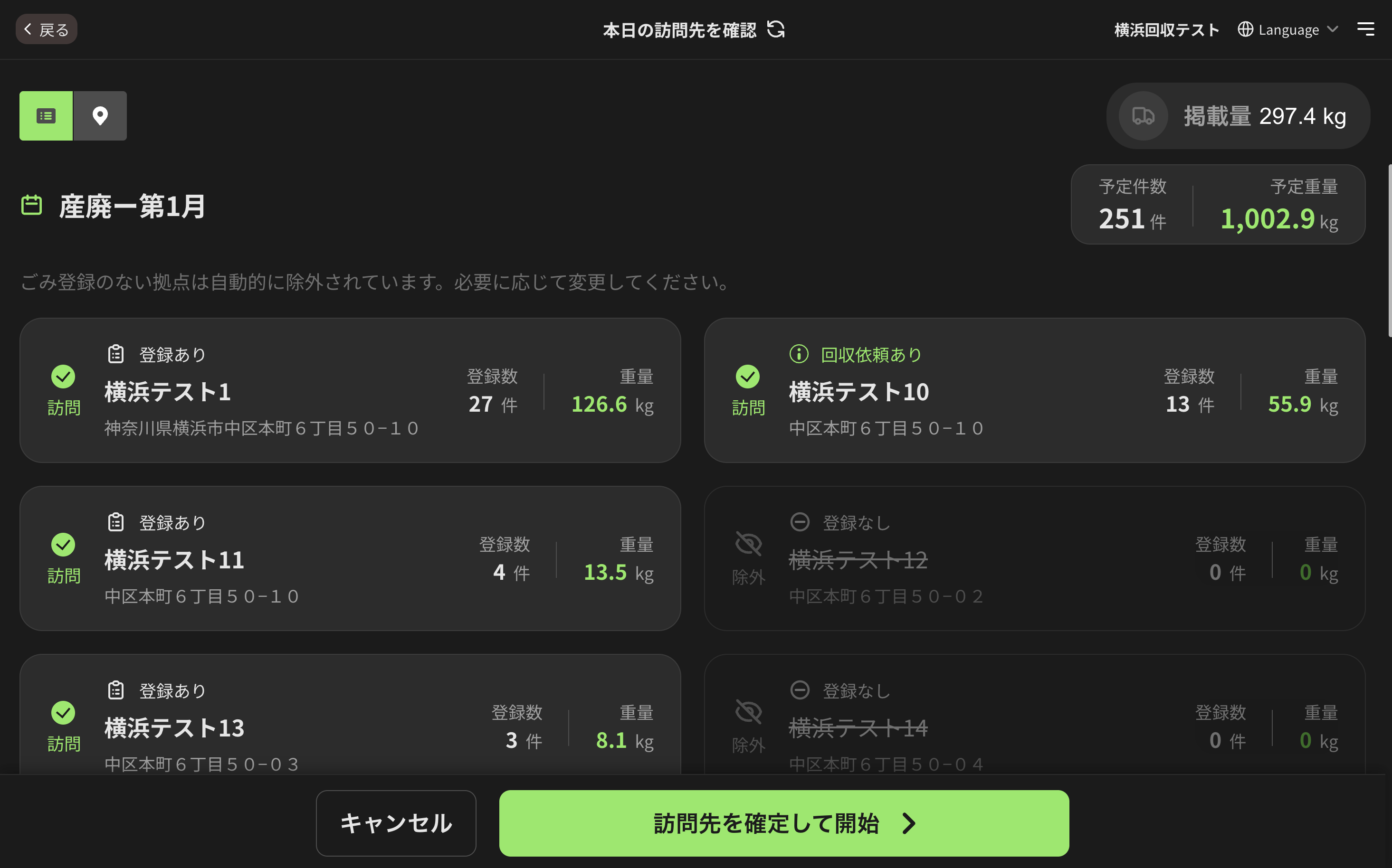
Per-tenant allocation and billing fall into place on their own at month-end.
Municipalities, large complexes, manufacturing sites, office buildings — the same pool runs across different sites.

1,200 sites and 400,000 discharge records a year, digitized with pool. On-site workload cut by 70%. pool usage is written into collection & transport specs as a prerequisite.

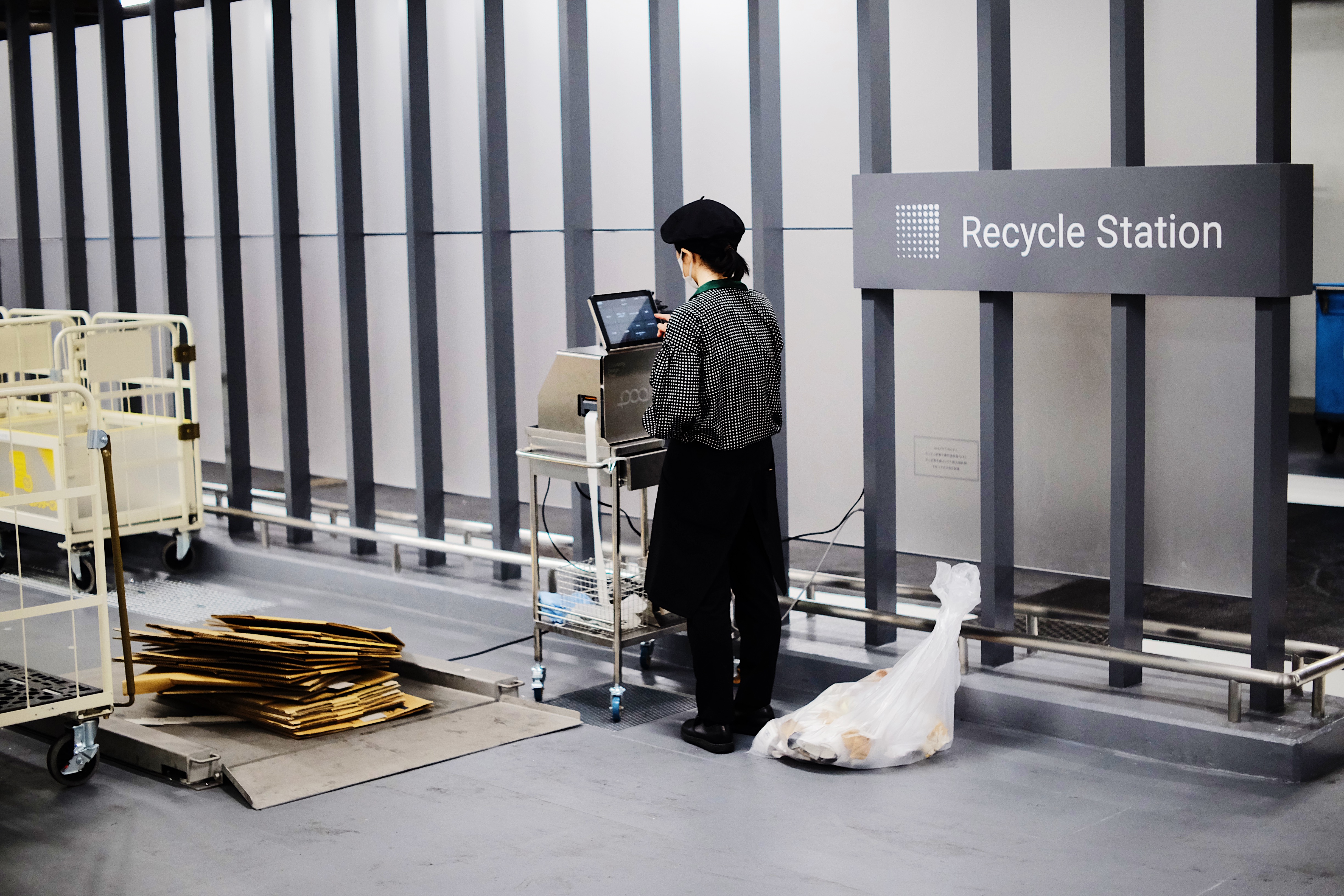
Waste volumes for 340 tenants measured individually via IC identification and labels. Fair per-tenant pay-as-you-throw billing and allocation, realized with data. The trash room became a recycling station.

Waste management for a large mixed-use complex, unified with pool. Manifest issuance per tenant is automated, handling a blend of retail and office.

The diverse industrial waste from multiple plants, managed centrally with pool. Live across every plant under headquarters control. From on-site operations to supply-chain disclosure.
After CO2 disclosure was in place, waste is next.
Regulation, cost, international standards — three axes moving at once.
SSBJ, GRESB, CSRD, the Food Recycling Act, the new Plastics Act — after CO2, disclosure of waste and resource circulation is becoming mandatory. Being able to produce primary data at any time becomes the prerequisite.
The 2024 logistics problem, energy prices, labor shortages — the cost structure of waste disposal has shifted sharply in the last few years. Efficiency is the last big frontier left.
The GCP (Global Circularity Protocol), mandatory third-party certification — the circular economy is becoming the common language of global markets. A prerequisite for the international competitiveness of Japanese companies.
pool is that infrastructure.
Start with the materials. If it clicks, take the 30-minute demo.
Scale it to your number of sites, with no strain.
For investors, media, and partnerships, reach us at info@recotech.co.jp
FAQ
It is a way for waste generators to centrally manage waste volumes, disposal costs, manifests, and outsourcing contracts per site and per tenant on a single data platform. pool is a cloud waste management system that makes waste volumes visible from measured weighing data and automates everything from per-tenant allocation to headquarters reporting.
The more sites and tenants a waste generator has, the better cloud fits. It wins on centralized cross-site data management and aggregation, remote oversight from headquarters, and low maintenance overhead. Because pool is cloud-based, you run on the same platform even as sites grow.
You record measured weighing data per tenant at the point of discharge and allocate by actual figures rather than by floor area. pool automates per-tenant waste weighing and allocation, leaving the data that justifies fair per-tenant billing (pay-as-you-throw).
First, make waste volumes visible through measurement and understand where the most is generated by item, by site, and by tenant. pool supports everything from making discharge visible to identifying reduction opportunities and optimizing collection, driving down disposal costs.
On top of cost savings, you can use measured primary data — not estimates — for Scope 3 Category 5 (waste generated in operations) accounting and GRESB reporting. pool's measured data raises the credibility of sustainability reporting.
You need a mechanism that weighs every discharge and aggregates the data automatically. pool automates everything from weighing to aggregation and reporting, eliminating manual tallying errors and effort.